
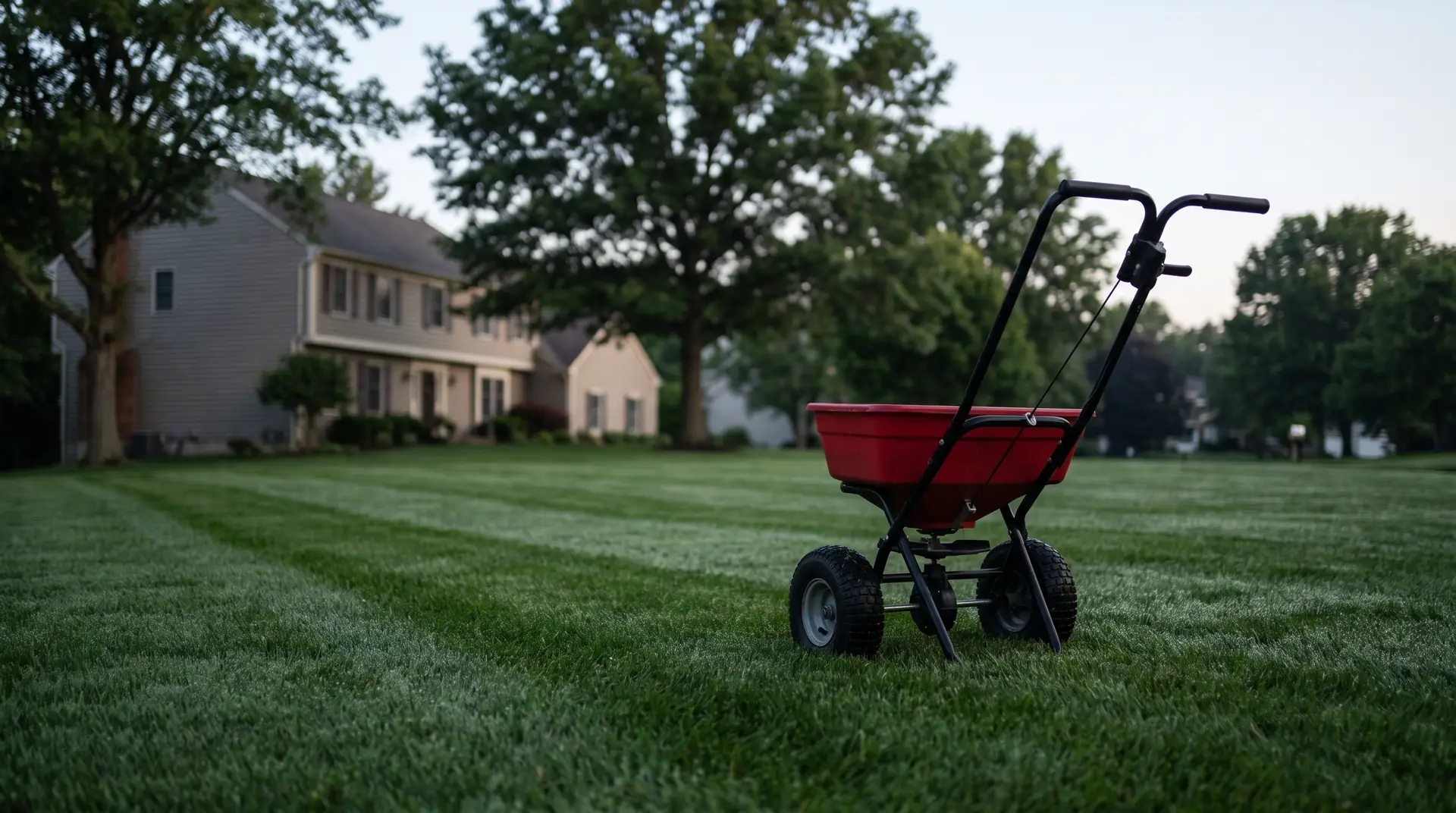
Lawn Fertilization.
Five feedings, timed right.
Pale, thin grass is a feeding problem. Your lawn gets fed five times a year, each one when the soil is ready, not on a calendar date. The last one goes down after the day New Jersey stops letting you do it yourself.
Pick what you need. We look at the property and text you a number, usually the same day.
Lawn Fertilization
Lawn fertilization in Bernardsville, Basking Ridge and the Somerset Hills
A green lawn in this part of Morris and Somerset County is not luck. It is nitrogen at the right time, on soil that can actually use it, from someone who is allowed to put it down when it matters most.
Most lawns here are pale for the same reason. They get fed once in April with whatever bag was on sale, then nothing. By July the grass is starving, by August it is brown, and by the next spring it is thinner than the year before. A feeding program fixes that because it treats the lawn like the living thing it is, with food arriving when the roots are growing and nothing wasted when they are not.
What the program includes
- Early spring, a light feed plus the crabgrass blocker before the soil warms
- Late spring, the big growth feeding with weed control while weeds are growing
- Summer, a small feeding only, because heavy feeding in the heat burns a lawn
- Early fall, the recovery feeding, timed with fall seeding
- Late fall, the winterizer, before the December 1 professional cutoff
- Soil test first, so the blend matches what your lawn is missing
Why the bag from the store does not work
A store bag is one blend for the whole state. Your lawn is short of something specific, and the only way to know what is a soil test. Most Somerset Hills soil runs acidic, which locks up the food you put down, so half of that bag never reaches the grass. We test first, correct the pH with lime where it is needed, and then feed what the soil actually lacks.
Timing is the other half. Feed too early and the spring rain washes it into the Passaic. Feed hard in August and you burn the lawn. Every feeding on this program goes by soil temperature, not the date on a calendar.
The feeding you are not allowed to do yourself
New Jersey fertilizer law stops homeowners from applying nitrogen or phosphorus after November 15, and nothing goes down again until March 1. A licensed professional applicator has until December 1. That late fall feeding, the winterizer, is the single most valuable application of the year. It feeds the roots through the winter so the lawn wakes up green in March instead of waiting for May. It sits inside the two weeks only a licensed pro can use, and Botti Home Services is licensed.
The same law says turf fertilizer sold here carries zero phosphorus unless a soil test shows the lawn needs it, and every bag must hold at least 20 percent slow release nitrogen. We work inside those rules on every property.
What it does for the lawn
Color comes back in about two weeks after the first feeding. A thick lawn takes a season, because thick comes from seeding and soil, not just food. Paired with weed control on the same visits, the lawn gets denser every year and the weeds have nowhere left to grow.
Fertilization is one of our a la carte lawn services. Rutgers Cooperative Extension publishes the turf guidance this program follows, including the northern New Jersey seeding and feeding calendar.
Get the lawn on a feeding schedule.
Tell us the size of the lawn and what it looks like now. We send a number, usually the same day.
How it works.
Three steps. No contract before anyone has seen the property.
We look at the lawn
We check the grass, the soil and the problem spots, then send a number by text.
The soil gets tested
A lab test tells us the pH and what is missing, so the blend fits your lawn.
Five feedings, on schedule
Each visit is timed to soil temperature. You get a text when the lawn is safe to walk on.
More services
Everything else on the property.
One quote covers all of it. Pick what you need and we sort it out.
Pest control plan, $80 a month
House perimeter every quarter, ticks and mosquitoes all season, one licensed tech. Month to month, no contract.
See the planLawn care
Aeration and seeding before October 5, the winterizer feeding before December 1, weed control while the kill holds. Sold a la carte.
Lawn servicesTick and mosquito control
Barrier spray on the perimeter and shade, April through October, so the backyard is usable all summer.
DetailsMice and rodent control
Mice move in when it gets cold. Found, sealed out and dealt with. Plan members get it at a member rate.
DetailsPlant and shrub care
Six visits a year for the hedges, shrubs and ornamentals. Feeding, bugs, disease and a proper trim at the right month.
DetailsLandscaping
Fall cleanups and leaf removal, mulch and edging, hedge trimming, weekly mowing, patios, walkways and retaining walls.
DetailsWhere we work.
Based in Bernardsville. The Somerset Hills and the Morris County towns around it, about 20 minutes out. Close by and not on the list? Ask.
Quick answers.
Is it safe for kids and dogs?
Yes, once it is watered in and dry, usually the rest of that day. We tell you before we leave.
How soon will I see a difference?
Color in about two weeks. A thick lawn takes a season, because thick comes from seeding and soil, not just feeding.
Why can I not fertilize in winter?
State law. Nothing with nitrogen or phosphorus goes on a lawn between November 15 and March 1. A licensed pro gets until December 1, which is the feeding that matters most.
Do I need a soil test first?
For phosphorus the state requires one. Beyond that it tells us the pH, which decides whether the grass can even use the food.
Do you fertilize in Basking Ridge and Bedminster?
Yes. Bernardsville, Basking Ridge, Bedminster, Far Hills, Peapack Gladstone, Mendham, Chester and the towns around them.
Ready for a number?
Call or text, or start the quote form. We look at the property and reply the same day, most days.
(908) 210-3835